01
Sea water intake
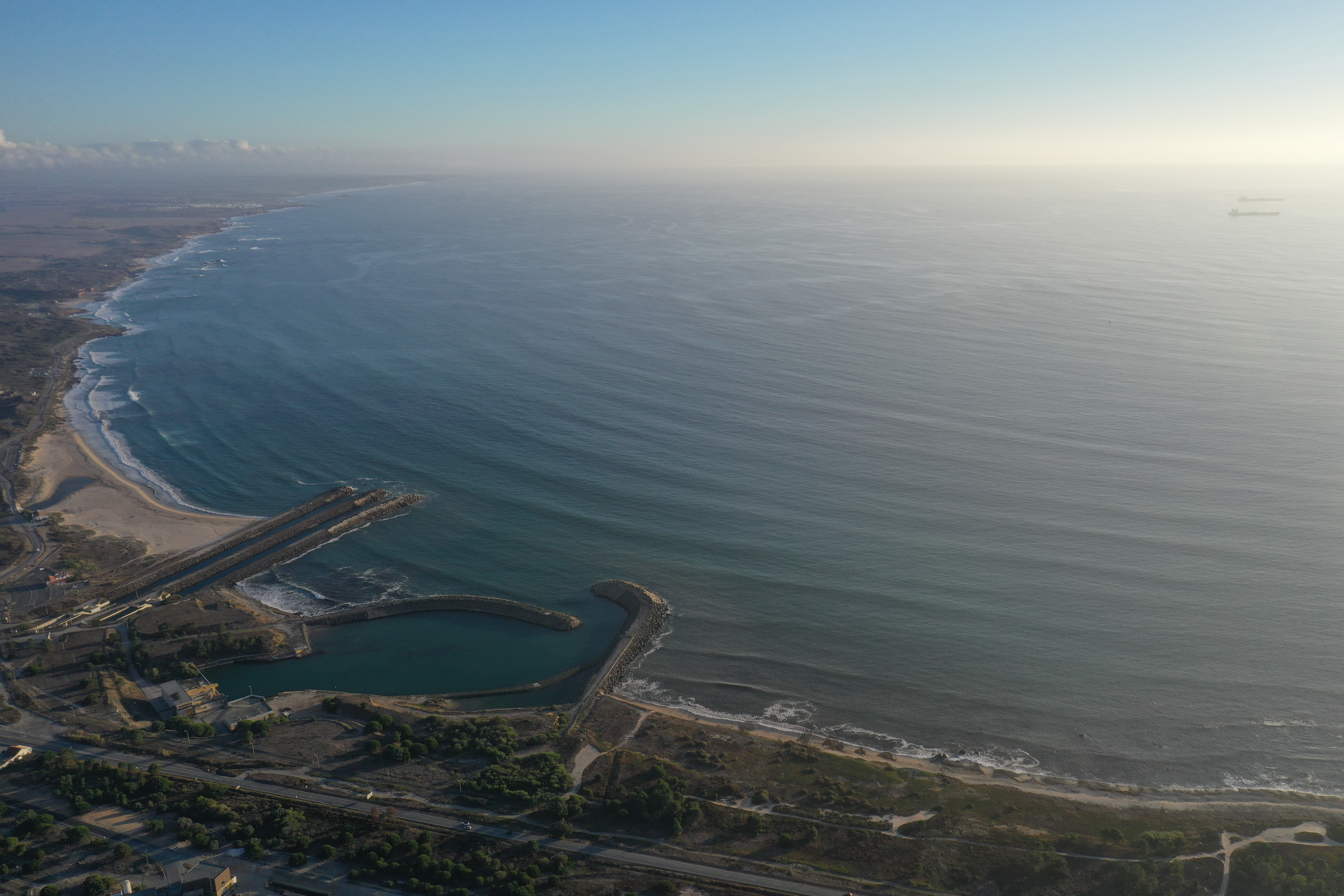
Sea water enters through intake infrastructure originally built for the former coal-fired power plant.
How the SINES Data Campus uses the Atlantic Ocean to cool AI and cloud infrastructure.
Sea water cooling is the design basis of the campus, which targets a water usage effectiveness (WUE) of zero and a power usage effectiveness (PUE) of 1.1.
Because customer IT equipment sets the load, cooling is the largest energy draw a data center operator manages. That is why the SINES Data Campus is designed around sea water.
Design PUE target for the campus
WUE target by design: no freshwater used for cooling
Net sea water consumption: every litre abstracted is returned
Thermal power of the early sea water project already in operation at SIN01
The system reuses the intake and return infrastructure of the neighbouring decommissioned coal-fired power plant in Sines.
Sea water is abstracted from the Atlantic, passes through heat exchangers that take heat away from the data center cooling loop, and is returned to the ocean.
Because the circuit is once-through, the volume returned matches the volume abstracted, giving net sea water consumption of zero. No freshwater is evaporated to reject heat.

Sea water enters through intake infrastructure originally built for the former coal-fired power plant.
Heat from the IT load is transferred from the data center cooling loop to the sea water.
The same volume of sea water is returned to the ocean through the existing return infrastructure.
SIN01 completed its first full year of metered operation in 2025, and the cooling system is being brought online in stages.
| Stage | Status at SIN01 |
|---|---|
| Early sea water project | Up to 10 MW of thermal power in operation |
| Supporting cooling (interim) | Dry coolers, cooling towers and chillers, matched to operating conditions |
| Full sea water cooling system | Primary system, pending licensing |
| Resilience | Multiple cooling routes and backup generation; zero disruptions during the Iberian grid outage of 28 April 2025 |
Since 2023, Start Campus has supported StartMarineBio, a long-term scientific monitoring programme for the marine ecosystems along the Sines coastline.
By the end of 2025, four monitoring campaigns had surveyed intertidal and subtidal communities, building two years of pre-operational data before any cooling-water discharge.
Monitoring continues for at least six years after sea water cooling begins.
High-density AI hardware is increasingly cooled with liquid. At the SINES Data Campus, liquid cooling technologies are integrated into the design, and the sea water infrastructure can reject that heat efficiently.
Start Campus and JetCool have partnered so that customers who need high-temperature liquid cooling for AI GPUs can use JetCool's microconvective cooling directly with the campus's sea water cooling. This reduces the need for mechanical chillers.
Talk to the Start Campus team about capacity, timelines and delivery models at the SINES Data Campus.