SustainabilityUpdate 2025
SIN01's first full year of operation on the Atlantic coast at Sines — energy, cooling, water, nature and community, reported as one integrated story.
Executive summary
Start Campus is building one of Europe's largest data center campuses: 1.2 GW IT across six buildings on the Atlantic coast at Sines, Portugal. Our first building, SIN01, has been operating since October 2024. The other five are in different construction phases. This update covers SIN01's first full year of operation, alongside an active construction period.
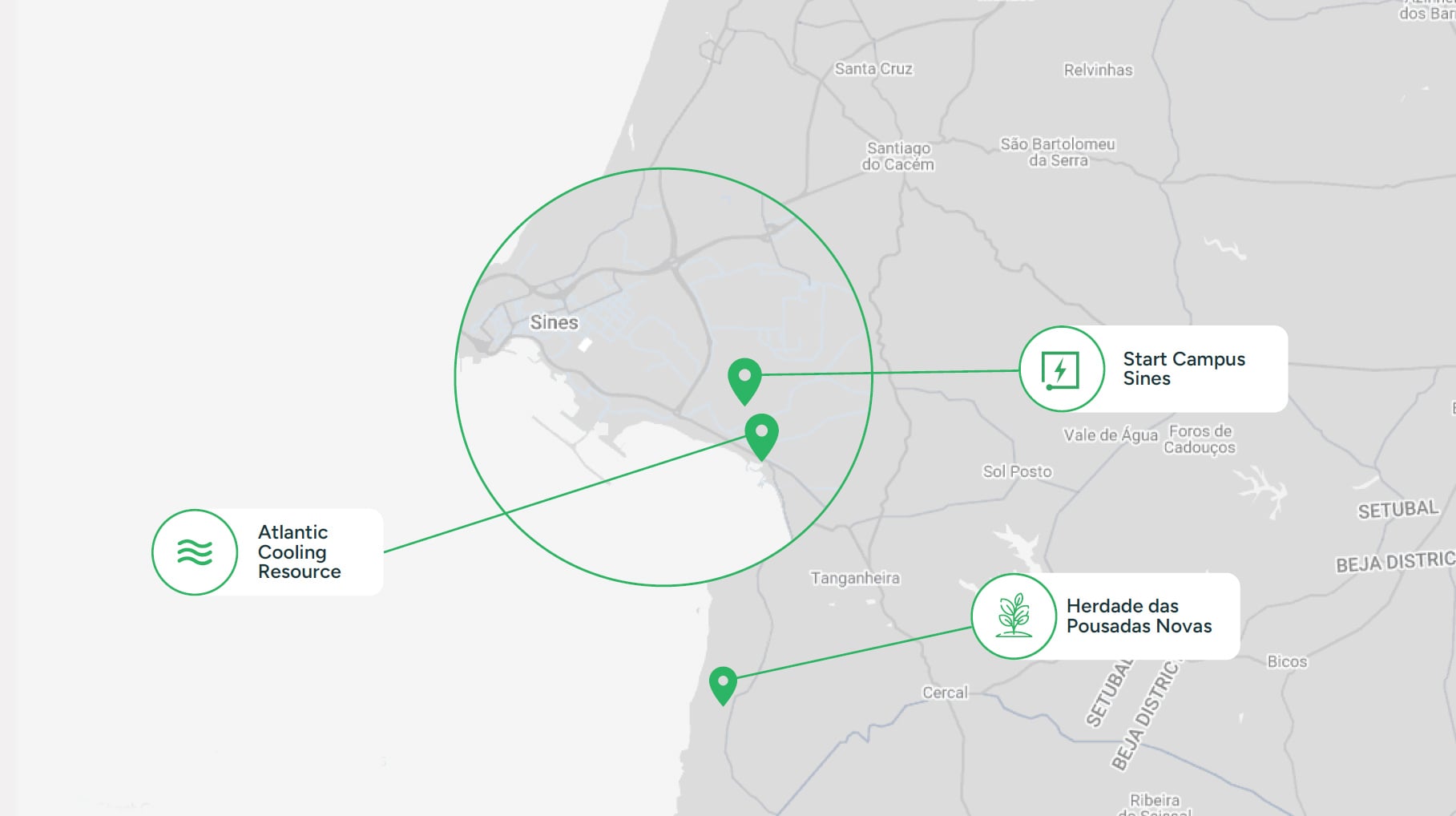
Sustainability shapes how we design the campus, and its location helps us deliver it: the Atlantic for cooling, renewable electricity generated in Portugal, and habitat restoration on the same stretch of coast. Sea water cooling is the design basis for the campus, which is designed to target a water usage effectiveness (WUE) of zero and a power usage effectiveness (PUE) of 1.1.
These aspects of our design and approach are integrated into one strategy, because on the ground they connect. Energy, cooling and water work as one system, and the land and the workforce around them are part of that same system.
The campus at a glance
Reporting boundary & notes
Period
2025, SIN01's first full year of metered operating data. The building was expanding throughout the year, so the record covers a facility whose IT load and cooling plant were still being added to.
Boundary
Start Campus-controlled operational and construction activity at the Sines campus; customer IT equipment sits outside the boundary unless stated. Performance figures cover SIN01 operations only.
Programmes
Described in this Update, including construction, habitat and skills work, span a longer period than the data.
Assurance
Data compiled internally, without external assurance.
Five highlights
Leadership foreword
Our SIN01 data centre on the SINES Campus is now operating critical digital infrastructure at scale. This brings a different set of responsibilities for Start Campus. Alongside delivering the wider campus, we are building the experience, controls and data needed to understand how the first building performs in practice.
This Update reports what we can evidence today: measured 2025 operating figures, the design characteristics of the campus and the status of each major system. Where the operating record is still developing, we say so. That is how we intend to build trust.
I am proud of the team building and operating this campus, and of the partnerships with our customers, community and industry that make the work possible.

We intend to build trust by being clear about what has been achieved, what is being measured and what is still maturing.
The Sines DC campus
One building operational, five in development and construction.
This Update captures the campus at a particular point in its development: SIN01 is operational and in expansion, while SIN02 to SIN06 are progressing through phased development and construction. Start Campus is therefore operating a live data center while building the wider campus around it. Quantitative performance data covers Start Campus-controlled operations at SIN01 during 2025, its first full year of metered operational data.
Building responsibly
Managing the environmental footprint of a campus under construction.
Construction decisions have long-term implications for the campus. Material selection, design choices and environmental controls during the works all influence its footprint. Experience from SIN01 is helping us strengthen the approach applied to the buildings that follow.
Our main construction partners operate integrated management systems certified to ISO 9001, ISO 14001 and ISO 45001, with environmental responsibilities set out in their own policies and extended to their supply chains. We prioritised more sustainable materials and lower-carbon solutions, supported by Environmental Product Declarations (EPDs), shaping decisions on concrete mix design, recycled content, regional sourcing and low-emitting finishes.

| ILO classification | SR | FR |
|---|---|---|
| Very good | <20 | <0.5 |
| Good | >20 to 40 | >0.5 to 1 |
| Average | >40 to 60 | >1 to 2 |
| Bad | >60 to 100 | >2 |
Operational energy, cooling and water
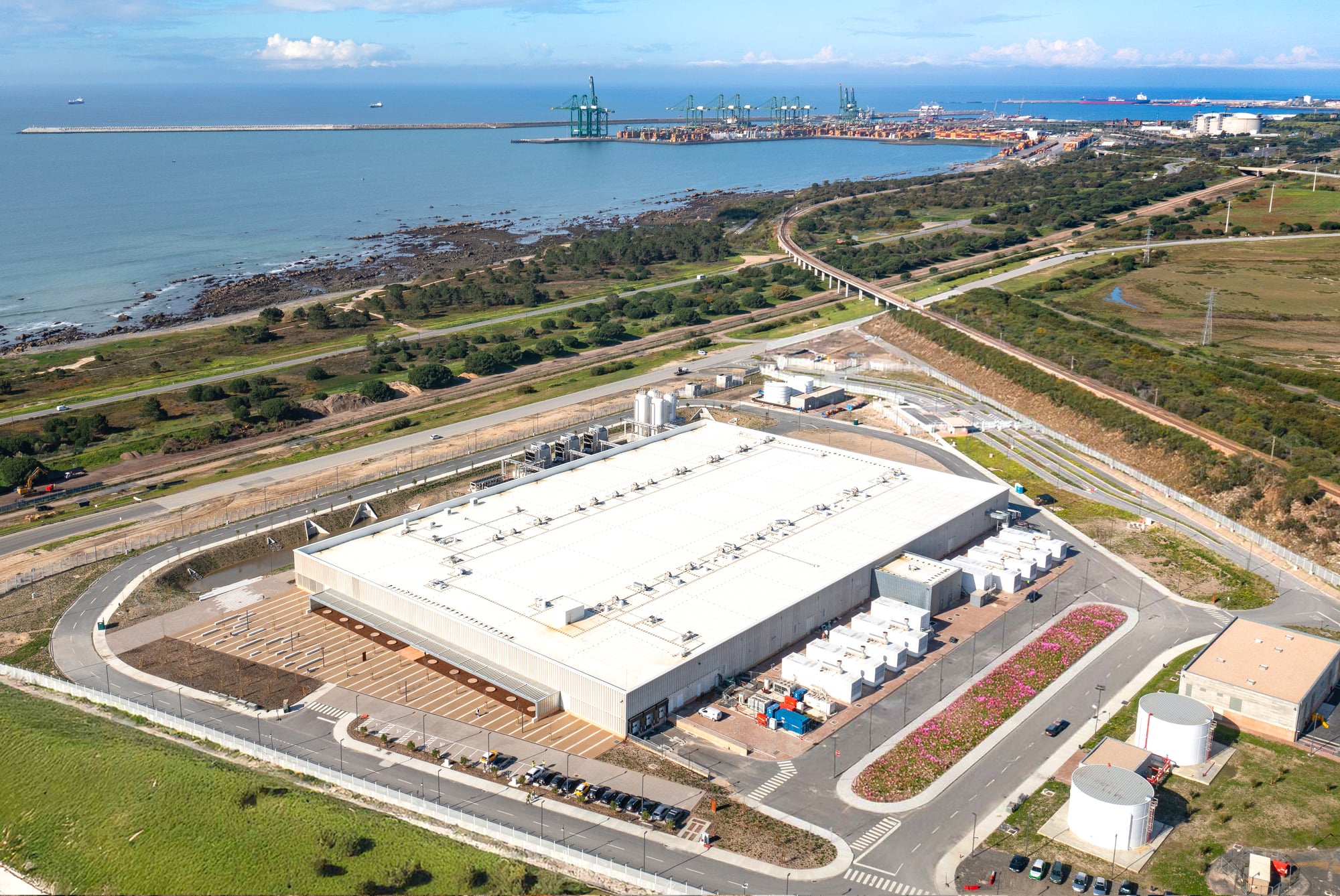
With SIN01 in operation, energy sourcing, efficiency, cooling, water and backup resilience work as one operational system. Electricity powers the infrastructure, cooling shapes much of the energy and water profile, and backup generators provide resilience during grid interruptions.
Because customer IT equipment sets the load, cooling is the largest energy draw Start Campus manages. That is why the campus is designed around sea water cooling with the end goal of a WUE of zero by design. The sea water system reuses the intake and return infrastructure of the neighbouring decommissioned coal-fired power plant. Because the circuit is once-through, the volume returned matches the volume abstracted, giving net sea water consumption of zero.
Operational efficiency
We avoid and reduce demand through design and operational choices.
Electricity matched
Operational electricity matched annually with renewable electricity generated in Portugal.
Designed for zero
Sea water cooling is the design basis, targeting zero water usage effectiveness by design.
Resilience by design
Multiple cooling routes and backup generation provide resilience and flexibility.
Our Cooling Approach
100% matched annually with cancelled Guarantees of Origin from renewable electricity generated in Portugal.
Nature and biodiversity
One approach to nature, applied on land and at sea, and built for the long term.
On land
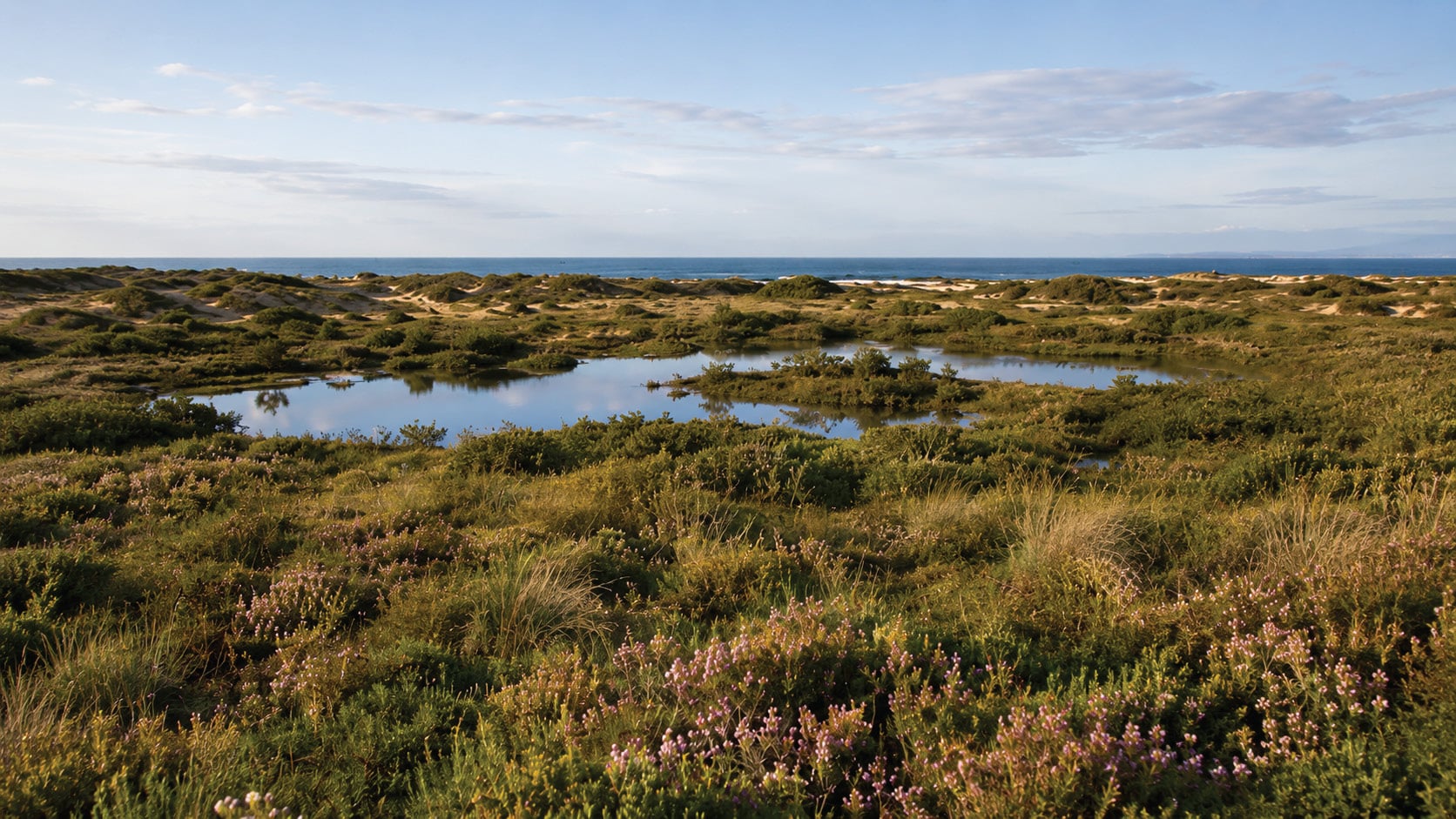
Between February and March 2025, three patches of Atlantic wet heath (~0.5 ha) were translocated under continuous ecological supervision to Herdade das Pousadas Novas. The patches were lifted as intact soil blocks, so that the rooted plants and the soil structure around them moved together. In addition, 185 big bags of rooted vegetation and associated soil, safeguarded during SIN01's construction, were moved to the same area — where Start Campus manages ~55 ha under a 25-year conservation programme.
At sea
Since 2023, Start Campus has supported StartMarineBio, a long-term scientific monitoring programme tracking the ecological condition of the marine ecosystems along the Sines coastline. By the end of 2025, four monitoring campaigns had surveyed intertidal and subtidal communities — two years of pre-operational data before any cooling-water discharge. Monitoring continues for at least six years after sea water cooling begins.
Community
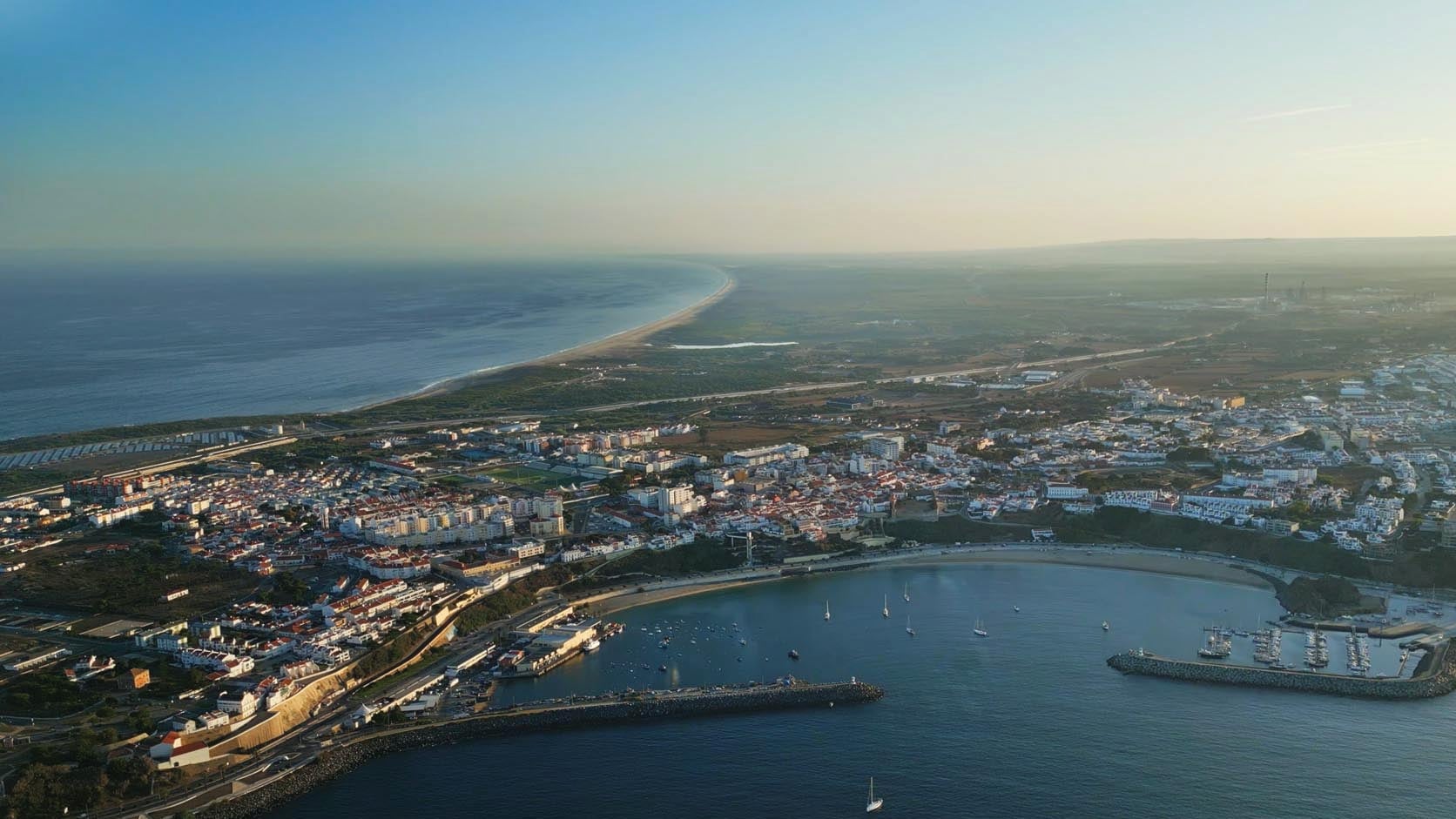
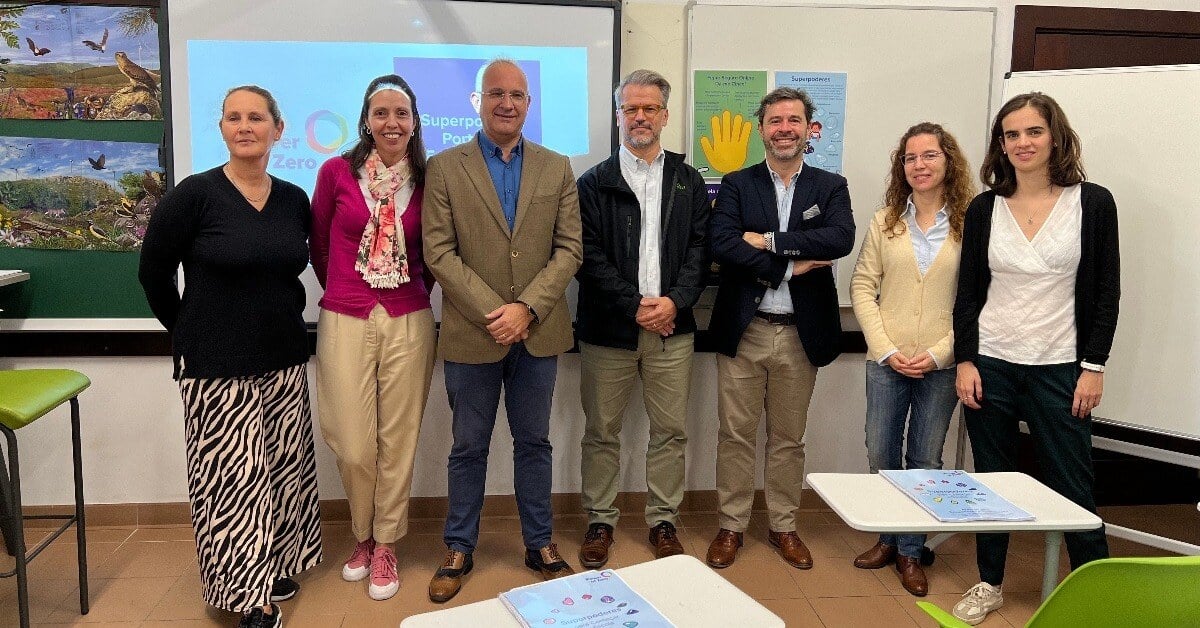
Sines is where the long-term value of the campus will be judged, and we work to keep the opportunities it brings in the region: through local hiring, education and skills, and direct community investment. In 2025, Start Campus facilitated a professional training pathway for Critical Infrastructures Maintenance Technicians, and hosted the first five interns on site at SIN01. Through Superpowers Portugal, 279 kindergarten and first-grade children across 21 classrooms in Sines took part in a programme on digital literacy, critical thinking, online safety and social-emotional skills.
Projected economic contribution
Independent analysis by Copenhagen Economics estimates that SINES DC could contribute approximately €16 billion to Portugal's GDP between 2025 and 2030 and support an annual average of ~28,700 full-time jobs across direct, indirect and induced employment.
GAMMA — community investment fund
GAMMA is our community investment fund: local organisations apply, and the community takes part in selecting which projects are funded. Its first edition funded three community-selected projects, reaching approximately 190 children, 33 young people and 30 students, and delivering 151 in-home physiotherapy sessions across more than 5,400 kilometres of travel.
What comes next
2026 turns the systems built during this period into a fuller operating record: more measured performance, stronger integration across business functions, and a clearer basis for targets.
In 2026, the campus will begin to generate a fuller operating record while building. SIN01 will enter its second operating year alongside its continuing expansion, the cooling and water systems will have a more representative performance period, and the first monitoring results from Herdade das Pousadas Novas will begin to show how the restoration work is progressing.
We currently account for operational Scope 1 and Scope 2 emissions. Scope 3 screening is underway as part of mapping the full emissions inventory, and the completed baseline will be reported in the next Update. We are also embedding sustainability and ESG metrics into business-unit routines, so that energy, water, waste, safety, emissions, procurement, construction, operations, people and community data are owned where the decisions are made.
.jpeg)
-1.png)
-1.png)
Environmental performance data 2025
Waste, water, energy and land — the boundary is Start Campus-controlled operational infrastructure at SIN01.
| Waste metric | 2025 |
|---|---|
| Generated — operational waste | |
| Operations waste (t) | 36.76 |
| Non-hazardous (t) | 36.14 |
| Hazardous (t) | 0.61 |
| Recovery route (% of operations waste) | |
| Recycled (%) | 93.2% |
| Waste-to-energy (%) | 6.8% |
| Organic recovery (%) | 0.0% |
| E-waste (WEEE, LER 16 02 14) | |
| E-waste generated (t) | 7.12 |
| Recycled, e-waste (%) | 65.0% |
| Metric | Unit | 2025 |
|---|---|---|
| Industrial freshwater withdrawn | m³ | 41,763 |
| Potable water used for cooling | m³ | 0 |
| Total freshwater withdrawn for cooling | m³ | 41,763 |
| Metric | Unit | 2025 |
|---|---|---|
| Sea water abstracted | m³ | 692,942 |
| Sea water returned | m³ | 692,942 |
| Net sea water consumption | m³ | 0 |
| Metric | Unit | 2025 |
|---|---|---|
| Electricity (renewable) | MJ | 74,963,767 |
| Fuel, non-renewable | MJ | 0 |
| Fuel, renewable (HVO) | MJ | 346,580 |
| Total energy consumed | MJ | 75,310,347 |
| Electricity | GWh | 20.82 |
| Fuel, renewable (HVO) | L | 10,075 |
| Site | Municipality | Area (ha) | Within ZEC Costa Sudoeste |
|---|---|---|---|
| Data center campus | Sines | 59.4 | 50.6 ha (85%) |
| Sea water cooling infrastructure | Sines | 0.8 | 0 |
| Substation | Sines | 20.0 | 0 |
| Overhead lines | Sines & Santiago do Cacém | 46.0 | 0 |
| Total | 126.2 | 50.6 ha (40%) | |
| Priority habitat 4020* directly affected | Sines | 0.5 | 0.5 ha |
Appendix B — Definitions
Electricity & energy
- Renewable electricity, annual market-based matching
- Consumption matched over a reporting year with renewable electricity instruments, principally cancelled Guarantees of Origin, per the GHG Protocol Scope 2 Guidance (2015).
- Guarantee of Origin (GO)
- An electronic certificate evidencing that a defined quantity of energy was produced from a specified source, under Article 19 of the EU Renewable Energy Directive (2018/2001). One GO corresponds to one MWh and is cancelled when used, which prevents double counting.
Cooling & water
- Once-through cooling
- A circuit in which water is drawn from a source, passes through heat exchange and returns to the same source. Abstraction and return are equal, giving net sea water consumption of zero.
- Dry cooler
- A heat rejection unit that transfers heat to ambient air, consuming substantially less water than evaporative cooling for the same duty.
- WUE / PUE
- Water and Power Usage Effectiveness — ratios measured against IT load (ISO/IEC 30134-9 and 30134-2). Reported once expansion and cooling commissioning are complete.
Emissions & fuel
- HVO (hydrotreated vegetable oil)
- A renewable paraffinic diesel made from eligible waste or residue feedstocks, conforming to EN 15940. The up-to-90% lifecycle reduction against conventional diesel is based on supplier documentation.
- Scope 1, 2 and 3
- The three categories of greenhouse gas accounting under the GHG Protocol Corporate Standard.
Land & nature
- Priority habitat 4020*
- Temperate Atlantic wet heaths with Erica ciliaris and Erica tetralix, listed in Annex I of the Habitats Directive. The asterisk denotes a priority habitat type.
- Natura 2000 · ZEC · ZPE · PNSACV
- The European network of protected areas, and the Portuguese Special Area of Conservation, Special Protection Area and the Parque Natural do Sudoeste Alentejano e Costa Vicentina.
- Translocation
- The planned movement of plants, habitat material or soil to reduce harm from works and support conservation management.